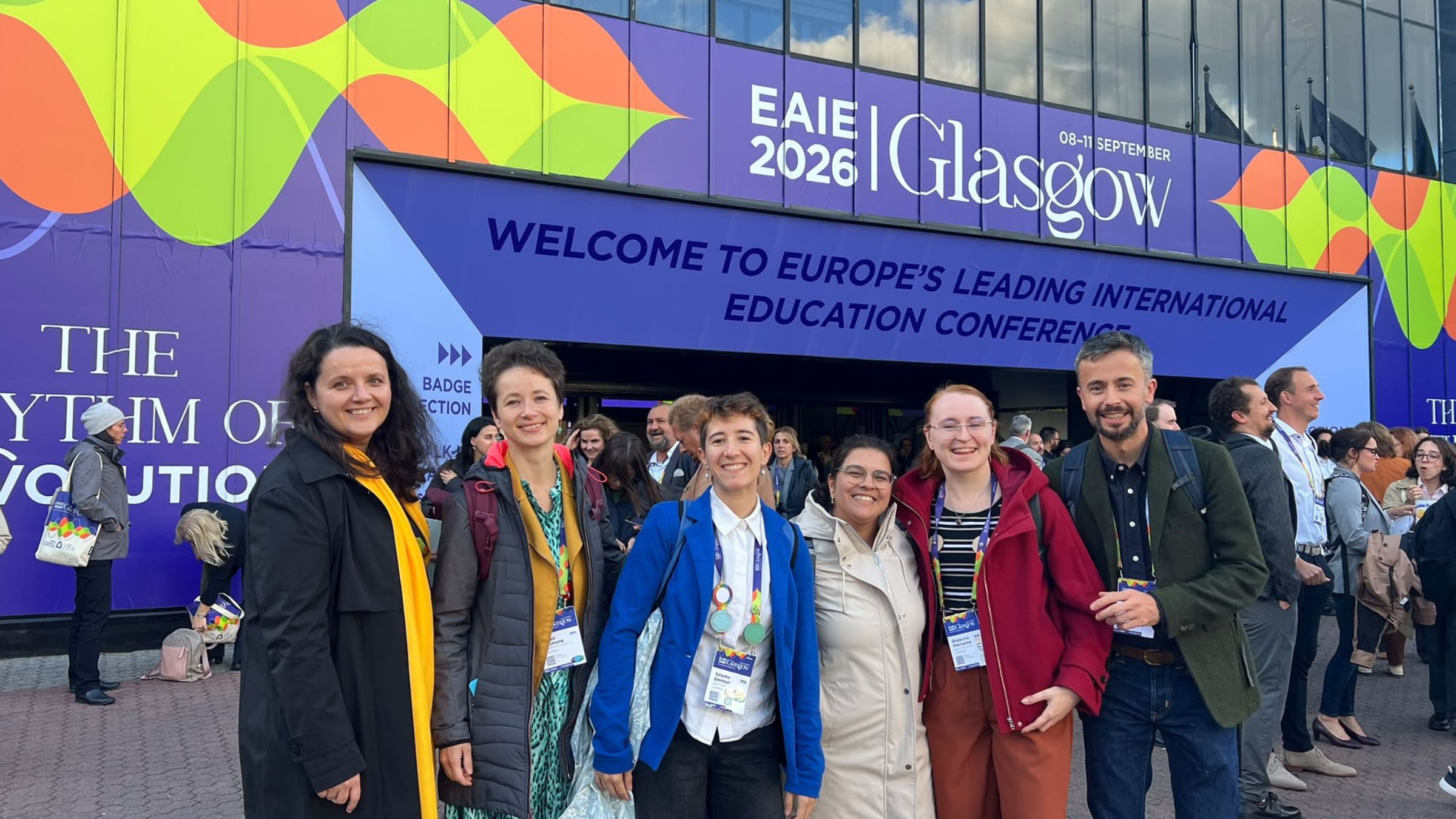
Under this year’s theme, The Rhythm of Revolution, more than 7,300 professionals gathered in Glasgow for the EAIE Conference 2026 to discuss the changing higher education environment. There was certainly no shortage of ideas to take home, with EUF members and colleagues contributing to many of them.
EUF booth: A meeting point for the community
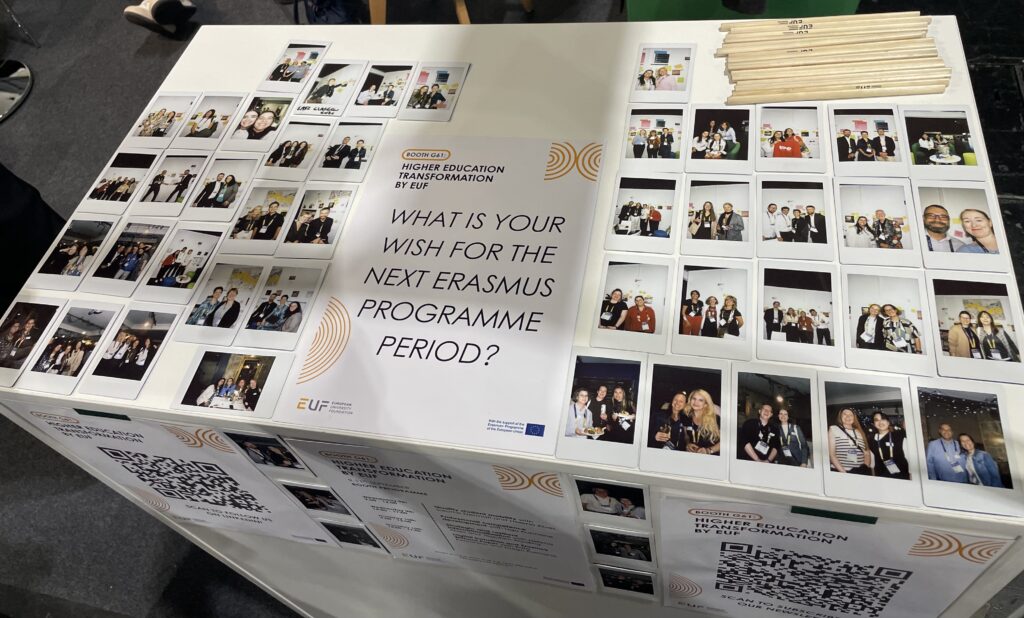
The EUF booth was designed to be more than a place to present initiatives. Throughout the conference, it became a natural meeting point for colleagues from across the network: a place to stop for a chat, reconnect with friends, meet new colleagues and continue conversations that had begun elsewhere.
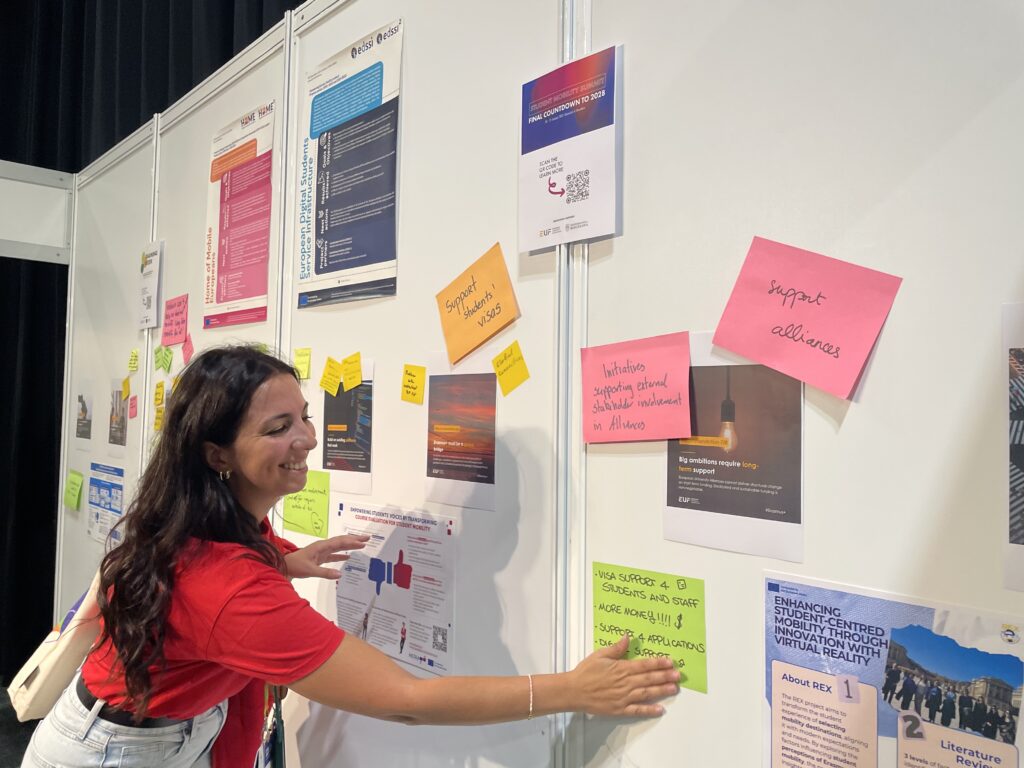
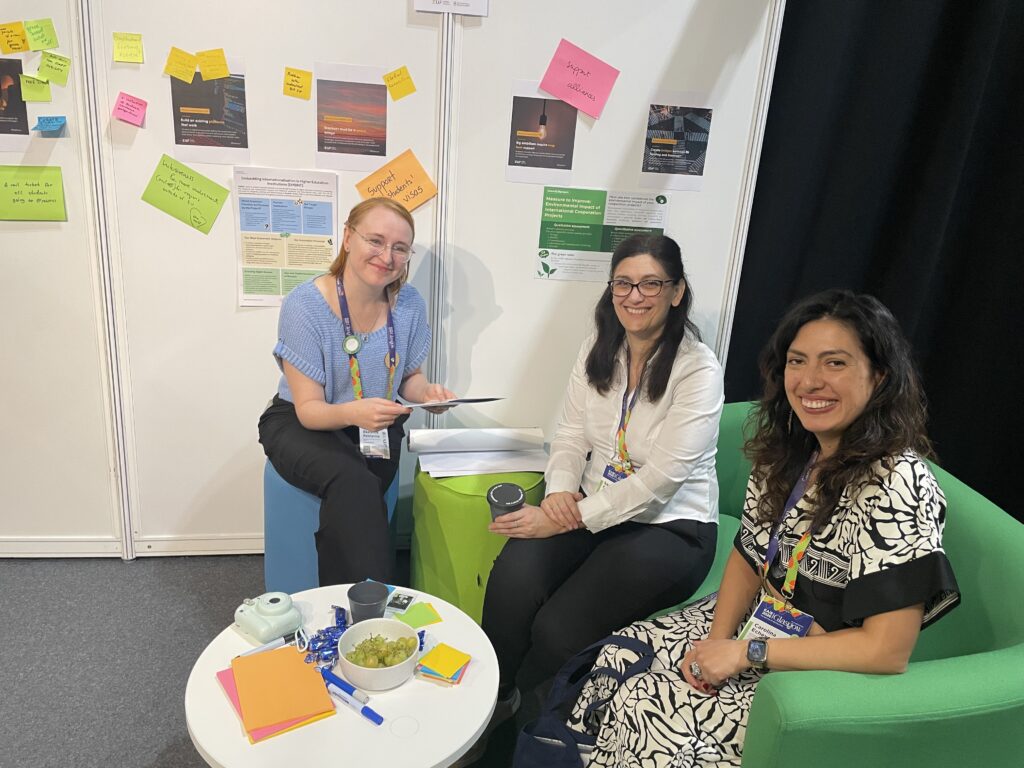
Reflecting the booth’s title “Higher Education Transformation,” one recurring theme across many conversations was the question “What is your wish for the next Erasmus+ programme period?” The prominently displayed question on the booth wall invited visitors to share their answers on post-it notes. The result was a wall full of recommendations, concerns, priorities and ideas.
In their aspirations for the next programme period, the higher education community called for less bureaucracy and micromanagement, and more stability. Colleagues expressed a desire for fewer changes, better planning and properly tested solutions.
The requests were also clear: easier grant payments, more flexible budgets, simpler reporting, better support for visas, support for staff mobility and removal of day-to-day grant calculations. Participants also called for long-term physical mobility to remain at the heart of Erasmus+, pointing out that inclusion cannot simply mean replacing longer mobility with shorter or hybrid formats. Another recurring theme was green mobility, with calls for practical measures to make greener travel more accessible to all students. The topic of digitalisation topped the agenda as well, echoing a wish for progress at a manageable pace that does not force institutions to adopt systems before they are prepared.
Beyond that, bigger-picture wishes were voiced: more resources, stronger support for European University Alliances, greater involvement of regions outside the EU, global connections, stronger inclusion, better monitoring of learning outcomes and greater involvement of external stakeholders.
Taken together, these insights offer something too often overlooked in policy discussions: a direct snapshot of what programme implementation looks like from the lens of people who make it work every day. It is exactly this frontline perspective that has shaped the network’s policy recommendation on the future of the Erasmus+ programme, which you may read here.
Alongside deep reflections and policy discussions, a sense of community set the tone at the EUF’s traditional Network Reception for members. The evening gave colleagues a space to reconnect in person, exchange perspectives and talk about the priorities that matter to them. The reflections from the reception, as well as some photos, can be found in the EUF LinkedIn post here.
EAIE Sessions: Erasmus+ at a Turning Point
At a moment of ongoing change for the programme, these sessions showed EUF colleagues and members focused on practical and applicable solutions:
The World Café “From disruption to direction: Navigating values and resilience in international relations offices” gathered participants from around the world to discuss crisis preparedness and resilient internationalisation. Case studies on crisis management protocols helped participants to understand what other IROs are doing to become more resilient, and were followed by lively discussions on how values-based internationalisation can be put in practice and what questions should be asked to assess how aligned a potential partnership would be.
The Roundtable “The missing beat: Revolutionising mobility through intercultural preparation and debriefing” We were glad to see such strong interest in the session, so strong, in fact, that the room felt a little too small! What made the session particularly inspiring was not only the live simulations and role plays, but also the wealth of practices colleagues shared from their own institutions – from preparation before mobility to reflection and debriefing afterwards.The discussion was a good reminder that going abroad does not automatically mean learning from the experience. https://padmica.eu/
The Roundtable “Changing tracks: Understanding and guiding sustainable student travel” was singled out by several partners as one of their favourite sessions of the conference thanks to its highly interactive and solution-oriented approach. You can access the resources for higher education institutions and the PPT shared on this Padlet.
New rules, new mindset: Managing the rhythm of lump-sum funding: The session was an opportunity to look beyond the technicalities of lump-sum funding and ask a more practical question: how do we want to manage projects in this new environment? The discussion showed just how diverse institutional practices can be and that there is no universal formula to follow. What matters is developing the judgement to distinguish between what is genuinely useful for the success of the project and what is simply administrative habit.
What we take home from Glasgow
If there was one message we took away from EAIE 2026, it was that the higher education community is ready for change, but it wants it to be meaningful. It wants digitalisation that works; greener and more inclusive mobility, without losing sight of the value of meaningful physical international experiences; and a more ambitious Erasmus+ that keeps implementation predictable and manageable for the institutions. And above all, it wants to and should be part of shaping what comes next.