Erasmus+ changes the lives of hundreds of thousands of students every year, and with tens of thousands of higher education staff members involved in its management, it is special. Special because thousands of institutions implement procedures to make sure their students can benefit from the programme. Special because tens of thousands of staff members manage all practical aspects from funding to qualitative support measures, making the programme one of the most successful initiatives of the EU.
Managing such a large programme is complex not only for the EU authorities but also for the higher education institutions. As we are heading towards a programming period change in 2028, the community needs to anticipate changes that are lying ahead: It has happened before: when the previous transition occurred, International Relation Officers (IROs) were in a difficult position, not least because they lacked clarity about how to implement mobility flows after the last project mobility ended and the next funding had not yet been received, but also because, during this process, IROs did everything they could to minimise the impact on students.
This is at the core of the IRO work: offering the best possible mobility experience to students and ensuring the process runs smoothly while managing overlapping priorities and administrative requirements.
Given IROs’ extensive hands-on experience, several questions arise: What can the programme learn from them? How can processes and mobility implementation be streamlined to leave more time to focus on improving students’ experience? And what should high-quality student mobility look like in the future programme? To address these questions, the 3rd edition of the Student Mobility Summit will be dedicated to the future of student mobility in Europe and beyond.
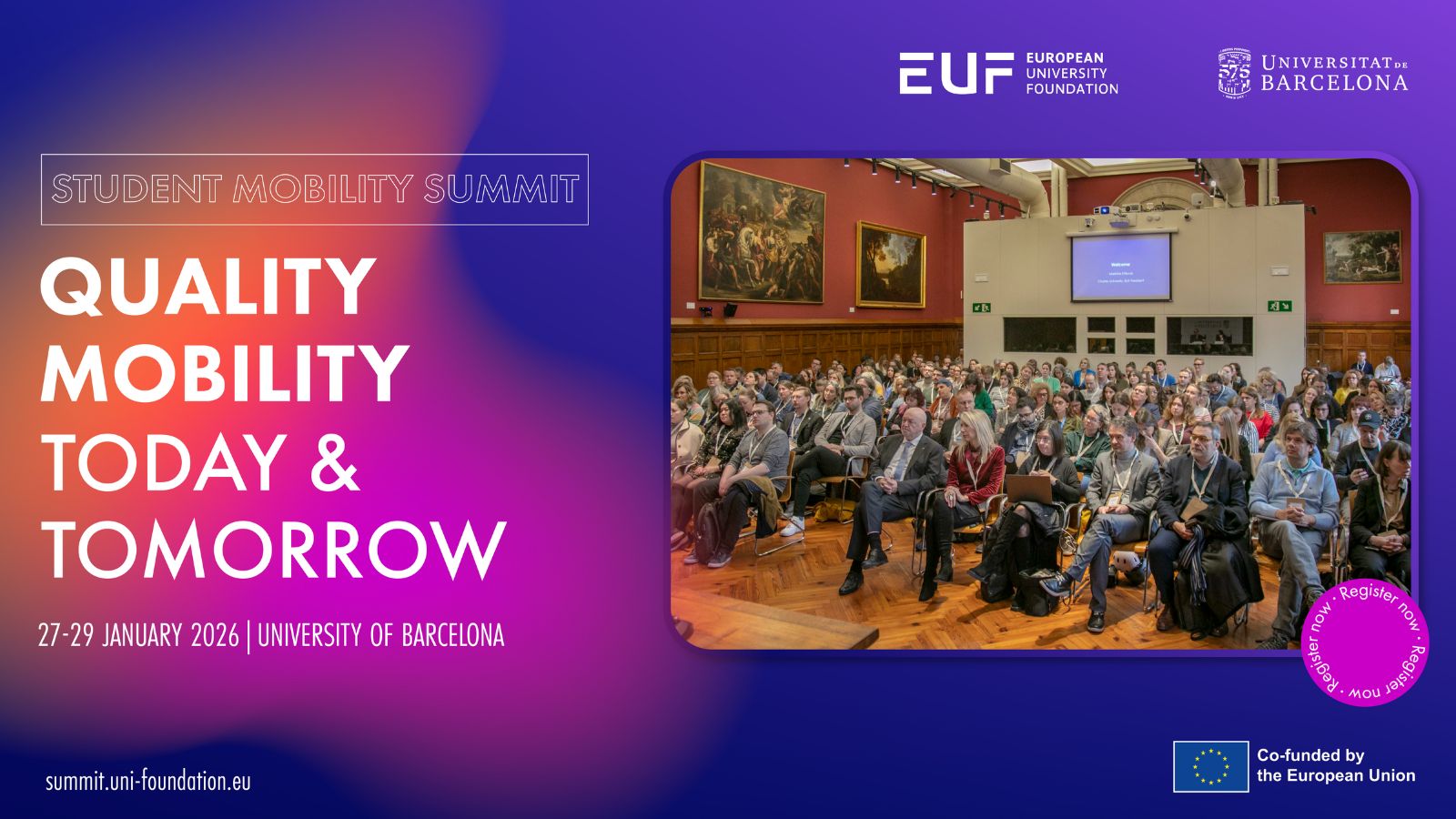
Student Mobility Summit 2026 – An event from IROs, to IROs
The next Student Mobility Summit will give IROs the space to reflect and prepare for the upcoming transition period of Erasmus+. By joining this event – explicitly designed for IROs across Europe – participants will share and gain practical skills and knowledge to strengthen their local mobility practices and learn how to leverage their experience to advocate for better Erasmus+ mobility. Topics such as practitioners’ engagement with policymakers or the definition of quality mobility parameters will empower IROs and make them true agents of change in their institutions. Moreover, the majority of the confirmed speakers lead International Offices, demonstrating a clear understanding of the challenges of Erasmus+ mobility.
In addition to the training elements, the Summit will foster co-creation by inviting participants to tackle real-life challenges affecting International Offices and Universities more broadly. Issues such as University-business collaboration or the merger between KA131 and KA171 will help IROs envision the future of mobility, putting them in the driving seat of change.
The conclusions of the SMS will undoubtedly fuel the programme discussions in the coming years – making this a key moment you will not want to miss. Registrations are open until the 12th of December, but places are filling quickly – save your seat by registering through the event website: https://summit.uni-foundation.eu/.