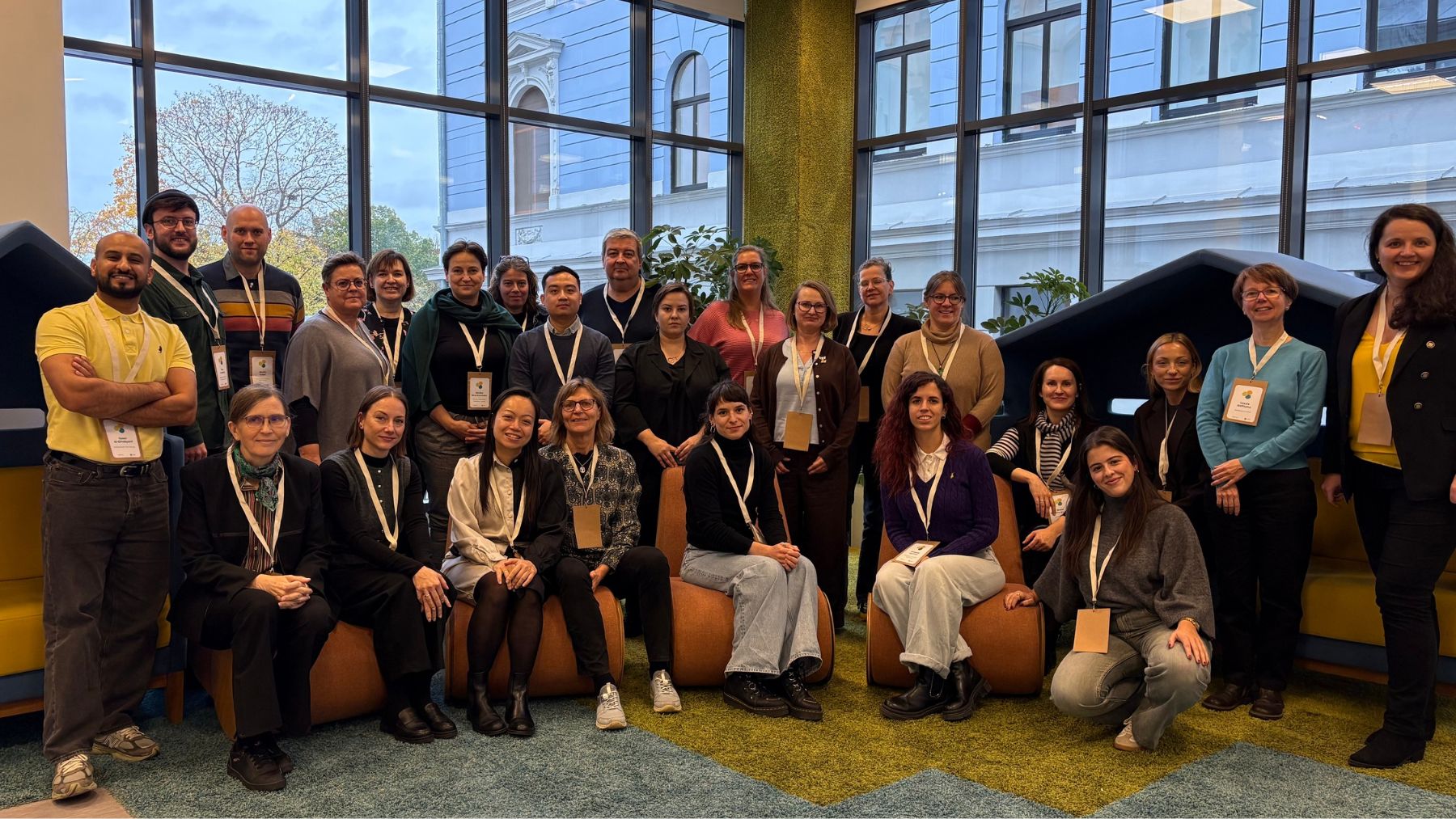
Last week, colleagues from across Europe gathered in Riga for the second edition of EUF Training Week, bringing together higher education professionals for several days of learning, exchange, and competence development. Hosted by the University of Latvia, the week combined expert input from facilitators, peer learning, and plenty of opportunities to connect with fellow professionals.
The week kicked off with the Lump Sum project management training, where we dove into practical strategies for managing Erasmus+ KA2 projects under the lump sum funding model. Through discussions, case studies, and hands-on exercises, participants reflected on all aspects of project management: planning, implementation, reporting, and risk management, while sharing their own experiences, dilemmas, and challenges from ongoing projects.
In the second half of the week, participants had the opportunity to engage in discussions on KA1 mobility management. The training touched upon key aspects of mobility management and internationalisation trends with the aim of offering a high-quality mobility experience, while focusing on how IROs can streamline their work through existing tools and good practices. As always, some of the most valuable learning happened through conversations between peers, where participants could compare approaches, ask questions, and explore solutions together. As a result, participants from this KA1-focused training brought home a wide range of ideas and resources to improve their mobility implementation, but above all, the feeling that they are not alone and that most universities experience the same issues.
The Riga edition also marked the introduction of a new training dedicated to KA1 and KA2 synergies and strategic collaboration, led by Ana Ćosić from the University of Split. Through interactive sessions, participants could explore different strategies for building meaningful connections between projects, various types of initiatives, and institutional priorities, opening up new perspectives on how European cooperation can create an even greater impact.
Throughout the week, participants repeatedly highlighted the collaborative atmosphere as one of the greatest strengths of the training experience, as well as the wide range of tools and templates shared during the sessions, reflecting the direct applicability to participants’ institutional contexts.
Beyond the classroom, participants had the chance to experience the city of Riga. From discovering the historic Old Town and its mix of Art Nouveau and Gothic architecture, creating coins at the House of the Black Heads, visiting the University’s unique former student prison and enjoying panoramic views from the rooftop, the social programme offered an abundance of opportunities to continue conversations and cultivate connections in unconventional spaces.
A sincere thank you goes out to the University of Latvia for being gracious and welcoming hosts, and to all participants and facilitators for making the week such an enriching and unforgettable experience.