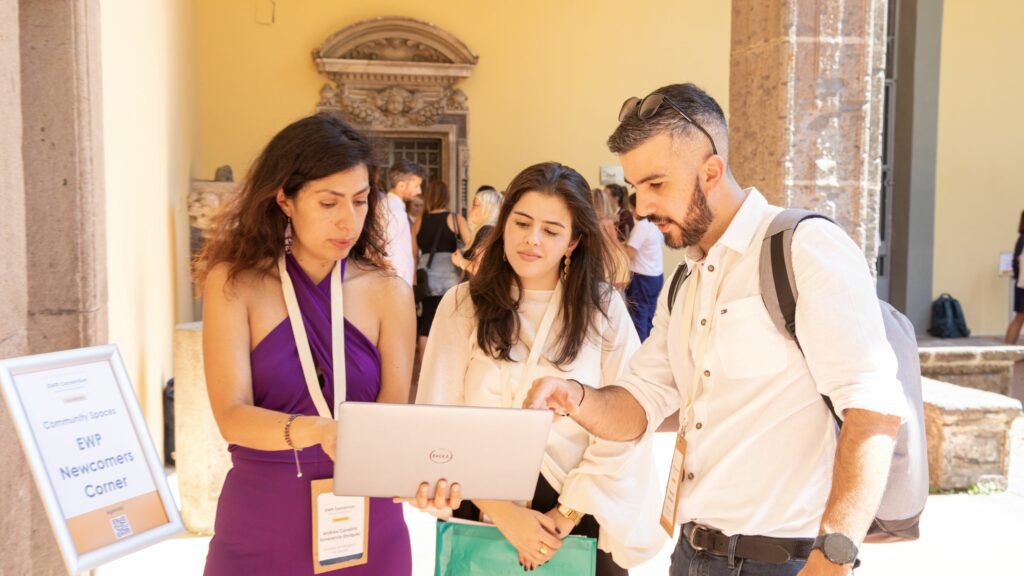
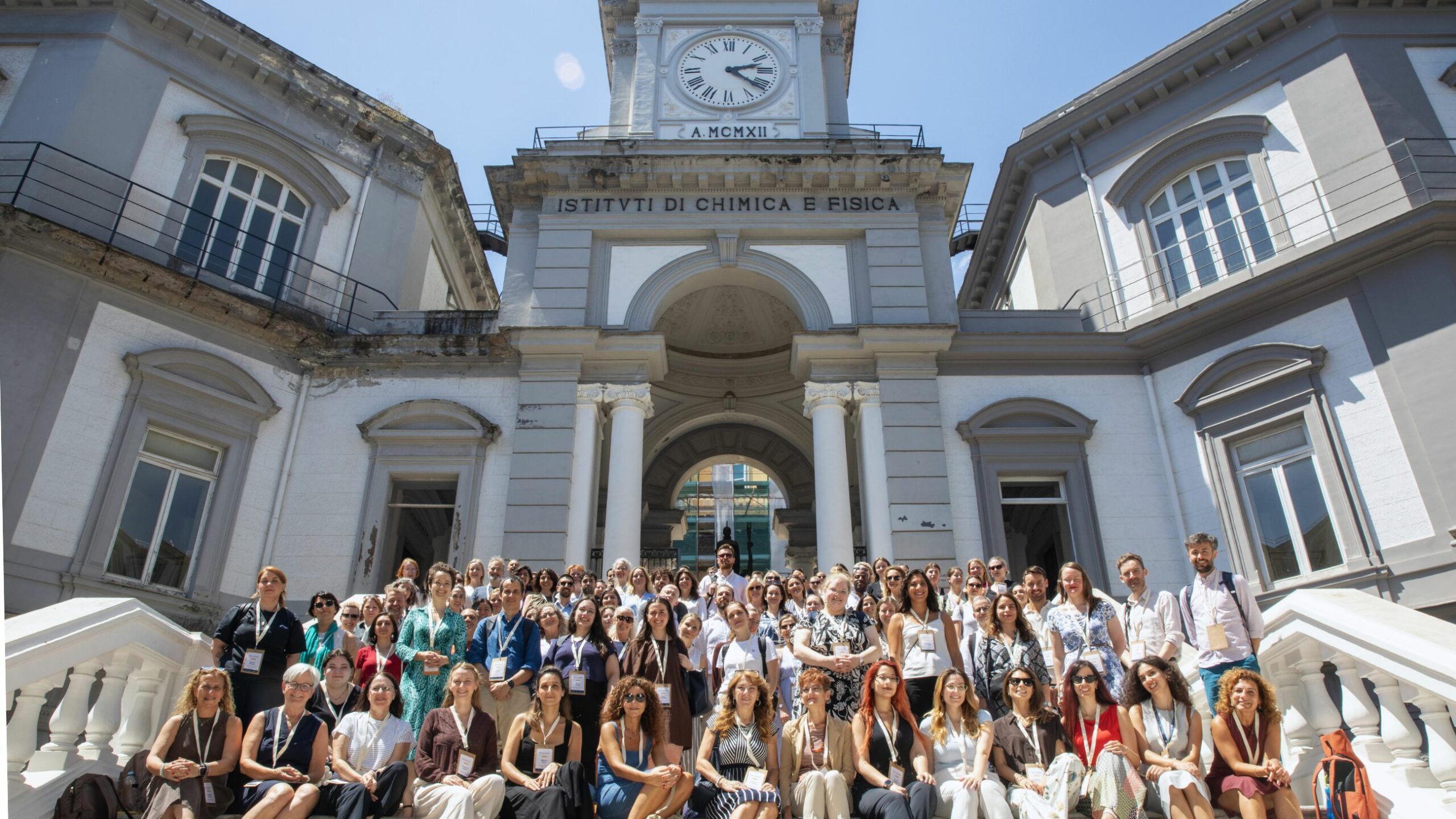
Last week, the EWP Convention 2026 brought together practitioners, experts and newcomers involved in Erasmus+ digitalisation for a fully booked and thought-provoking edition of the annual community gathering. Hosted by the University of Naples Federico II from 16 to 18 June, the event welcomed more than 150 colleagues from 28 countries for two and a half days of keynotes, panels, workshops, hackathons and community spaces.
This year’s motto, “Paving the way forward for a community-driven digitalisation,” set the tone for the Convention. At this pivotal point in the Erasmus+ programme cycle, the event offered an open forum to reflect on how to learn from the previous years of digitalisation roll-out and to ensure a smooth and user-centred Erasmus implementation in the years to come.
A very productive 12 months, with some challenges
In keeping with tradition, the Convention opened by taking stock of key developments that occurred over the last 12 months. Participants highlighted the growing adoption of Learning Agreements and their stability as a major step forward. Positive progress was also reported regarding Inter-Institutional Agreements; when taken together with the start of the process of adopting digital nominations, there was a clear sense of significant progress having been made.
A less positive aspect of the last 12 months, which was also discussed with the participants, was on the question of funding and sustainability of EWP, which, since April has been ensured by the EWP Consortium. This has had a direct negative impact on work that was underway to enable the interoperability of certificates of attendance and data portability, as resources had to be redirected to ensure the continued availability of the digital infrastructure.
By universities, for universities
This philosophy has always been at the heart of Erasmus Without Paper, which is entirely built on the principle of “by universities, for universities”. The Convention reflected this approach not only through its content but also through its format. Community spaces, panels, workshops and hackathons encouraged participants to move beyond listening and actively contribute ideas, challenge assumptions, and co-create solutions. A wide range of topics were discussed, including digital nominations, the roll-out of LAs, AI-assisted recognition, student experiences, and whether Inter-Institutional Agreements need to be renewed in the next Erasmus+ programme. Several key study cases were presented, ranging from how Italian universities support each other in the digital transition to the twin initiatives of Atlas and SMILE/SIRIUS, both of which demonstrate a renewed interest in IT solutions governed by universities themselves which enhance rather than detract their sovereignty.
Yet another topic prominently featured at the 2026 Convention were the discussions about extending the benefits of digitalisation to cooperation beyond Europe and Erasmus+, ranging from streamlining processes to working towards global interoperability. To top it off, participants also explored more ambitious ideas for rethinking long-established mobility procedures. For example, could we radically simplify IIAs? The answer at the Convention was a resounding yes.
Across the various sessions, the Convention provided a space for meaningful discussions and fresh insights, helping higher education practitioners shape their institutional digitalisation strategies and identify the tools, knowledge and partnerships needed to move forward with confidence.
Navigating uncertainty around the next Erasmus+ programme
Another central theme running through many conversations was the uncertainty surrounding the next Erasmus+ programme. While institutions remain strongly committed to digital transformation and have invested significant time, resources, and expertise into implementing Erasmus Without Paper and related initiatives, questions remain about the ESCI future priorities, governance models, implementation timelines, as well on funding, business continuity and the overall evolution of the digital infrastructure.
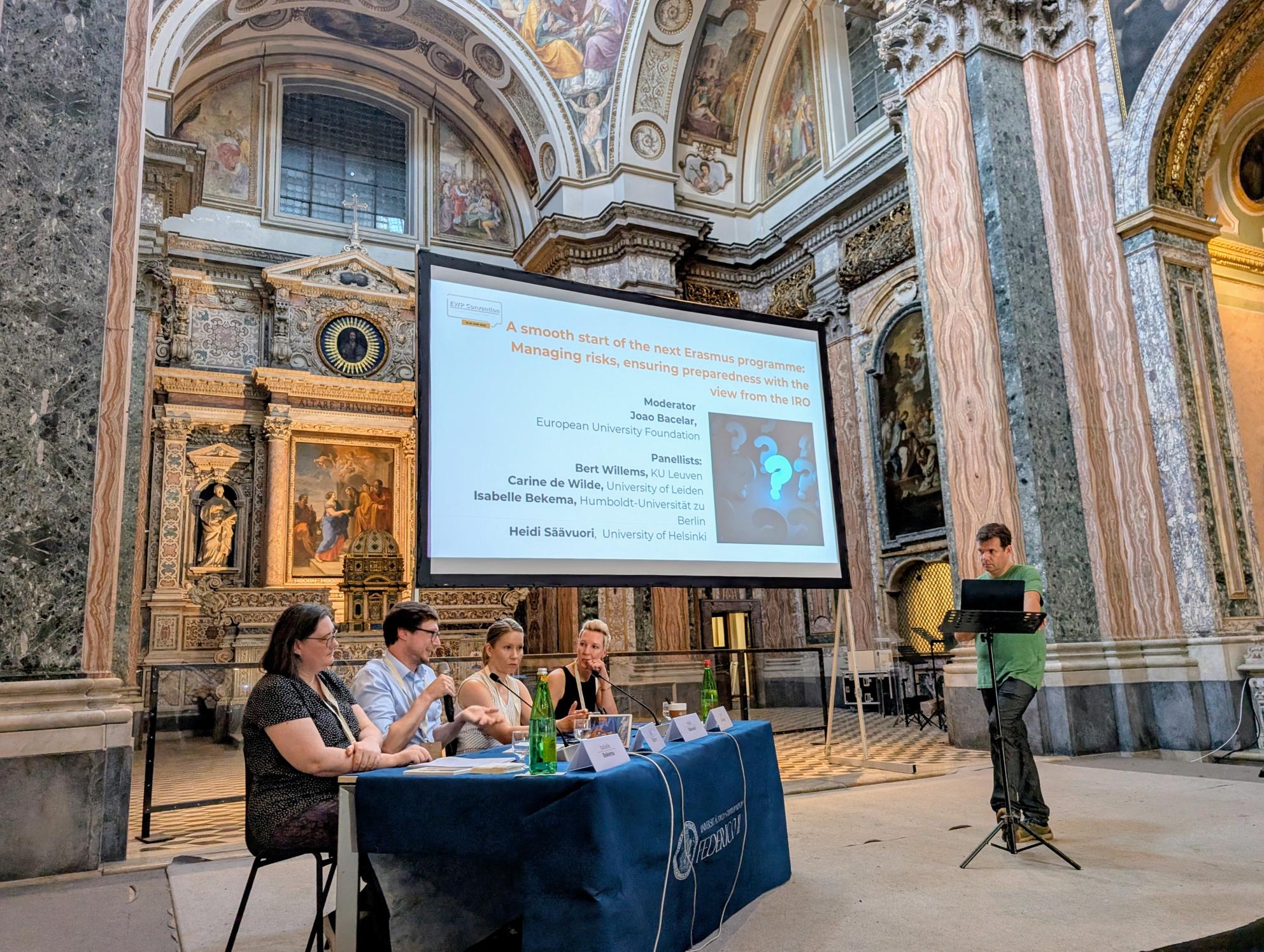
For higher education institutions, greater clarity is not merely desirable, but absolutely essential for strategic planning. Universities need confidence that further work will build on the investments they have made in the previous decade (and make today), whether in technology, staff development or process redesign. In addition, substantial time needs to be afforded to prepare for a smooth start of the next Erasmus+ programme. Many IROs are worried about another potentially chaotic start of the programming period, which was a perennial issue in conversations throughout the event, and provided a focal point for the last panel of the Convention.
From uncertainty to togetherness
The circumstances shaping the transition between programme generations made it clear that, throughout Europe, higher education institutions are all in the same boat, fostering a sense of togetherness across borders, IT systems, size of the IRO teams or levels of experience. Discussions often switched between what practitioners feel that should happen in the next programming period and the importance of being actively involved in the decision-making processes in a meaningful way.
International Relations Officers have been at the heart of Erasmus success for decades. They are the professionals translating policy into practice, supporting students and staff, managing partnerships, navigating its digital ecosystem and the increasingly complex programme requirements day after day. Their experience provides invaluable insight into what works, what creates unnecessary burden, and where future improvements are needed. If the next generation of Erasmus is to remain ambitious, resilient, and user-centred, IROs must not simply be informed about upcoming decisions; instead, they must be actively involved in shaping them. Their voice is not just one stakeholder perspective among many – it is one of the foundations upon which the programme’s success has been built.
What’s next?
The EWP Convention 2026 confirmed that stability and continuity remain core priorities for the community. As discussions continue, we remain committed to maintaining transparency and an open dialogue with the community regarding the future of the EWP Network and the EWP Dashboard.
We look forward to keeping you informed in the weeks ahead, with further updates and developments to be shared as they emerge.